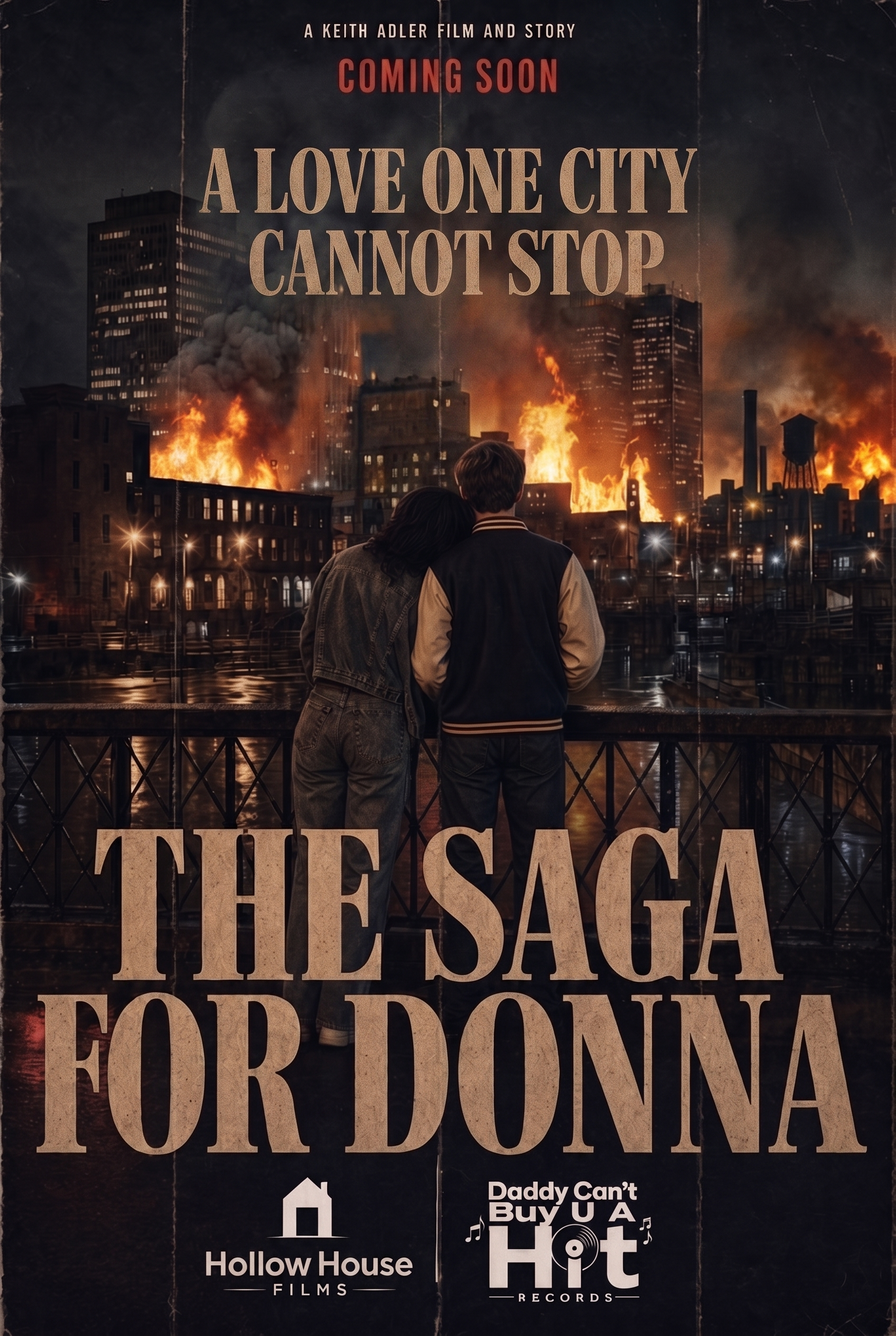
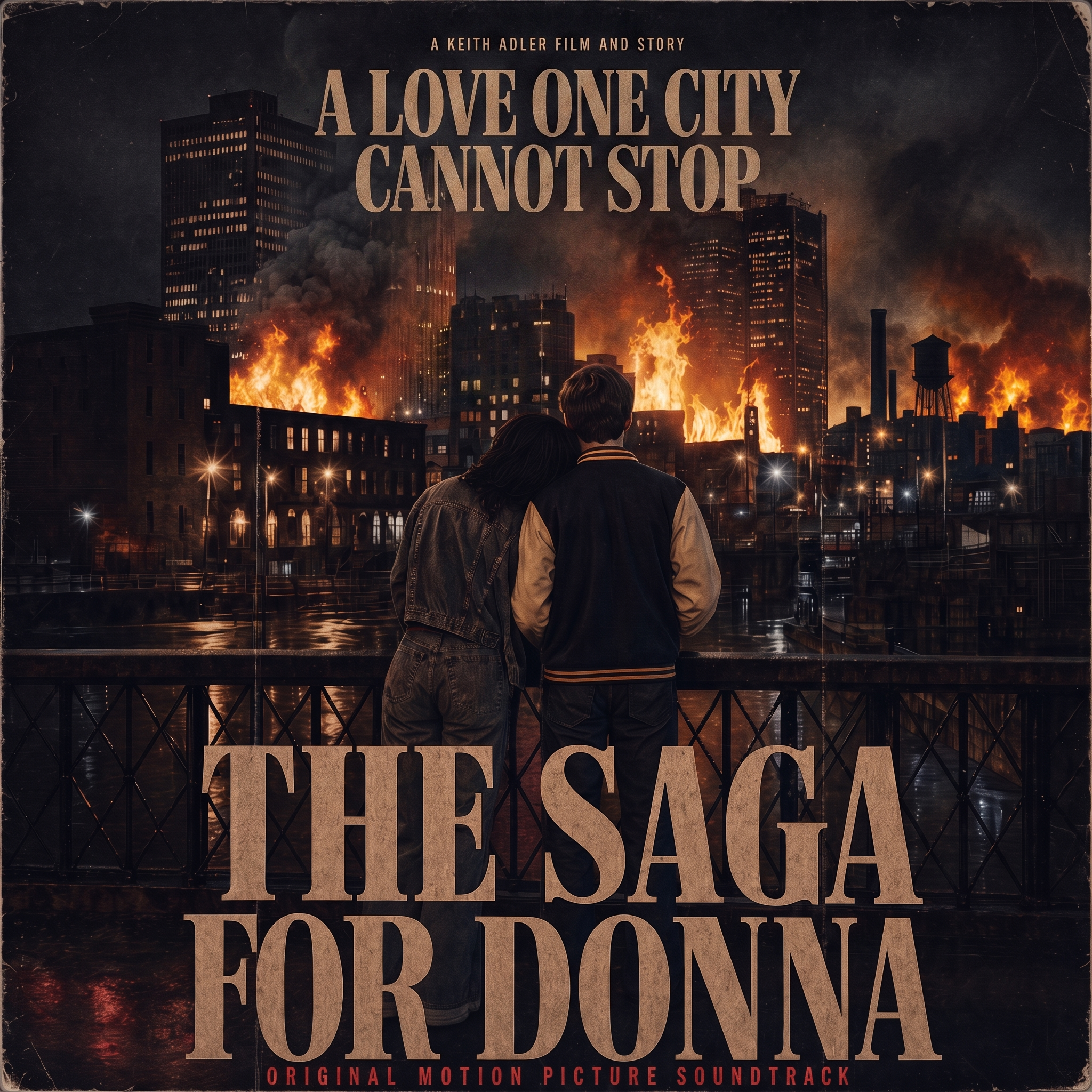
How I'm Making This Film
This is the exact process I used. One person, no crew, under $7,000. If you have a story and a laptop, you can do this in 2026. Here is how, step by step. Every tool, every cost, every tip - documented so the next person can follow the same path. My goal is not just to make this film. It is to prove the map works so other creatives can use it.
STEP 1
Write the story
Tools: Any LLM for brainstorming (Gemini, Grok, NotebookLM). Your brain for the actual writing.
What you make: A novel or treatment first (to find the story), then a proper screenplay (to build the film from).
Time: 2-4 weeks for the novel. 2-3 weeks to convert to a shooting script.
Cost: $0 (free tiers are enough for brainstorming)
Tip: Write the novel first even if you only want a film. A novel forces you to know your characters completely. The screenplay is stronger because the novel existed. The novel is the sketch. The script is the painting. Use AI adversarially - not to write for you, but to stress-test what you wrote. Feed it your manuscript and ask it to find contradictions, dropped threads, and logic gaps. The story is yours. The AI is the cross-examination.
STEP 2
Compose the soundtrack
Tool: Suno
What you do: Play each piece on piano (or hum it, or write it out). Feed the recording into Suno as a seed. Direct the arrangement - tell it the instruments, the feel, the era. Iterate until the orchestra plays what you hear in your head.
What you make: A full original soundtrack, one track per major scene or emotional beat.
Time: 1-2 weeks for 8 tracks.
Cost: ~$96 (Suno Pro annual subscription)
Tip: Do this before production design. The music tells you how scenes feel. It will influence your visual choices later. Also: keep the piano audible in the mix. The human hand that started the piece should stay present in the final arrangement.
STEP 3
Build production design (characters, locations, props)
Tool: GPT Image 2 (via ChatGPT)
What you do: Write detailed character descriptions (age, build, clothing, distinguishing features). Generate reference sheets: front, side, detail shots. Lock these images - they become your consistency bible. Do the same for every location and every prop that matters.
What you make: A complete production design package. Every character, location, and prop visualized and locked.
Time: 1-2 weeks.
Cost: ~$200 (ChatGPT Plus subscription)
Tip: Consistency is the hardest problem. The model does not remember what your character looked like last time. You must include reference images in every prompt. Check every output against your locked references. If the nose changes, the hair shifts, the jacket color drifts - regenerate. This is where patience matters most.
STEP 4
Generate the film
Tool: Higgsfield Cinema Studio (or equivalent video generation model)
What you do: Work scene by scene through your shooting script. Feed your locked character references and location images. Describe the shot: camera angle, movement, lighting, action. Generate. Review. Regenerate what doesn't work. Expect to generate 3.5+ hours of raw footage to get 109 minutes of usable material.
What you make: A complete rough cut of every scene in your film at 1080p.
Time: 3-4 months (this is the longest phase).
Cost: ~$4,200 for 3.5 hours of raw footage at ~$20/minute. That includes video generation, voice performances (ElevenLabs), and sound effects. 210 minutes of generated material to yield 109 minutes of final cut. The overage accounts for regenerations, alternate takes, and scenes that don't work on first pass.
Tip: Work linearly through the script. Do not jump around. Each scene teaches you something about prompting that the next scene benefits from. Your first scenes will be your weakest. That is fine. By scene 30 you will have developed a feel for what the model needs to hear. Also: the tools improve while you work. A scene generated in month 3 will look better than month 1 at no extra cost.
STEP 5
Record voices
Tool: ElevenLabs
What you do: Create a unique voice for each character. Feed your dialogue line by line. Direct the performance - adjust pacing, emotion, age, accent. For narration/voiceover, use a separate voice that carries the story between scenes.
What you make: Every line of dialogue and narration as individual audio files, ready for editing.
Time: 2-3 weeks.
Cost: ~$250 (Pro subscription)
Tip: Spend time on voice selection before recording anything. A voice that sounds 90% right will bother you across 109 minutes. Find voices that are 100% right for each character. Also: the audiobook narration uses the same tool but a different voice than any character. Keep the narrator distinct.
STEP 6
Edit the film
Tool: DaVinci Resolve (free version is enough)
What you do: Assemble your generated video scenes on the timeline. Layer in dialogue, narration, soundtrack, and sound effects. Adjust timing. Cut between shots. Add transitions where earned (most cuts should be hard cuts). Color grade if needed.
Sound effects: ZapSplat (real foley and ambiance). Crickets, car engines, radio static, door creaks, rain. Real sound effects ground AI visuals in reality. This is not optional.
Time: 2-3 weeks for assembly, 1-2 weeks for polish.
Cost: $0 (DaVinci Resolve free) + ZapSplat subscription (~$30)
Tip: Sound is half the movie. An AI-generated frame with real cricket sounds and real rain ambiance feels 10x more believable than the same frame in silence. Invest time in your sound design. Also: DaVinci Resolve's free tier has everything you need for a feature film. You do not need to pay for editing software.
STEP 7
Upscale to 4K
Tools: Topaz Video AI + Vast.ai (cloud GPU rental)
What you do: Export your finished edit at 1080p. Upload to a cloud GPU instance running Topaz Video AI. Upscale the entire film to 4K. The AI reconstructs detail, sharpens textures, and enhances the image far beyond simple upsampling.
Time: 25-30 hours of processing (runs overnight, unattended).
Cost: ~$200 (Topaz license) + ~$150 (cloud GPU time on Vast.ai with dual RTX 4090s)
Tip: 1080p source to 4K output is dramatically better than 720p to 4K. If your video generation tool offers 1080p, use it. The upscaler has 2.25x more data to work with and the result is visibly sharper. Run a test clip first to confirm settings before committing 30 hours to the full render.
STEP 8
Distribute
Platforms: Amazon Prime Video Direct (film), Amazon KDP (novel), your own website (everything else)
What you do: Submit the finished 4K film to Amazon Prime Video Direct. Publish the novel on KDP. Host your soundtrack, audiobook, and supplementary materials on your own site. Use Cloudflare R2 for media storage (pennies per month) and HLS adaptive streaming so viewers get quality matched to their connection.
Time: 1-2 weeks for submission and setup.
Cost: $0 (Amazon takes a revenue share, not an upfront fee)
Tip: You do not need festivals. You do not need an agent. You do not need permission. Amazon Prime Video Direct accepts independent submissions. If the quality is there, it goes up. The audience finds it or it doesn't - but it exists, and it is available, and nobody had to say yes for that to happen.
THE MATH
Total time: ~6 months working nights and weekends
Total cost: under $7,000
People required: 1
What you get: a novel, a screenplay, a soundtrack, an audiobook, and a feature film
The tools get better every month. The costs drop every month. What cost me $7,000 in 2026 will cost someone $2,000 in 2027. And someday it will cost $100. The democratization of filmmaking is not coming. It is here. You just have to have something to say.
The Tools
STORY & CREATIVE
Written, directed, and produced by Keith Adler
Gemini, NotebookLM, and Grok for story and script development
VISUALS
GPT Image 2
Characters, locations & props
Higgsfield Cinema Studio
Film generation (3.5+ hours raw → 109 min final)
Topaz Video AI
Upscaling and enhancement
The film is rendered natively at 720p, then upscaled to 4K using Topaz Video AI in the cloud. Cloud compute provided by Vast.ai, running two RTX 4090 instances simultaneously. Estimated upscaling time for the full movie: 25-30 hours. Estimated total cost for cloud compute and Topaz licensing: $450-$650.
AUDIO
ElevenLabs
Character voices & audiobook narration
DaVinci Resolve
Video editing
ZapSplat
Real sound effects
MUSIC
Suno
Original soundtrack
WEBSITE & HOSTING
Fly.io + Cloudflare
Global performance and caching
FILM DISTRIBUTION
Cloudflare R2 + HLS Adaptive Streaming
The full film is chunked into 6-second HLS segments at multiple quality levels and served globally through Cloudflare's edge network. Zero egress fees. No third-party video platform. No ads. No tracking. Viewers get adaptive bitrate streaming that adjusts to their connection - hosted entirely on infrastructure we control, at near-zero cost.
DEVELOPMENT & WORKFLOW
Website and production pipeline developed by Keith Adler using Claude
Tech Stack
Runtime: Node.js 22 on Fly.io (single container, auto-sleep)
Server: Express.js - serves the SPA, API endpoints, authentication, sitemap, and dynamic meta tags for SEO
Frontend: Single-page application. Vanilla HTML/CSS/JS - no framework, no build step, no dependencies. One HTML file serves the entire public site
Data: Static JS modules (scenes, characters, locations, props, outfits) loaded client-side. JSON file for runtime state (approvals, cuts). No database
CDN: Cloudflare R2 for media storage (images, soundtrack MP3s, HLS video segments). Zero egress fees
Auth: Cookie-based session with bcrypt password hashing. Role-based access (admin/viewer)
Streaming: HLS adaptive bitrate - video chunked into 6-second segments at multiple quality levels, served from Cloudflare edge
DNS/SSL: Cloudflare (thesagafordonna.com) with full SSL
Deployment: Docker container deployed via Fly CLI. Push to GitHub, fly deploy, live in 30 seconds
AI Development: All code written in partnership with Claude. No boilerplate generators, no templates - every line purpose-built for this project. This pipeline will form the basis of the next film
GOING FORWARD
This approach will be applied and improved on every future film. The goal is to go from thought to as many channels of storytelling as a story can carry. Novel, screenplay, soundtrack, film, audiobook. When the material earns it, build all of it.
By late July, when full film production begins, the tools will have improved again. Costs will drop and quality will increase. That's the trajectory these models are on, and timing production to ride that curve is part of the strategy.